A cooker can often show small warning signs before it fails completely. Some faults are inconvenient. Others are a serious safety risk and should never be ignored.
If your cooker smells of burning plastic, trips the fuse box, sparks, smokes, overheats, or gives you an electric shock, stop using it straight away. Turn it off at the wall switch and arrange a professional inspection before using it again.
Cookers combine high heat, electrical components, switches, fans, thermostats, elements, control boards, seals, hinges, and glass surfaces. When one part starts to fail, it can place extra strain on the rest of the appliance. That is why a small fault can quickly become a larger repair if it is left too long.
At Appliance Repairs Bristol Ltd, we regularly see cooker repairs that could have been cheaper and simpler if the fault had been checked earlier. This includes faulty oven hinges, intermittent switches, worn door seals, failed heating elements, noisy fans, and touch controls that gradually stop responding.
This guide explains the warning signs that need urgent attention, the smaller symptoms you should not ignore, and when to stop using your cooker immediately.
Burning Plastic Or Metallic Smells From Your Cooker
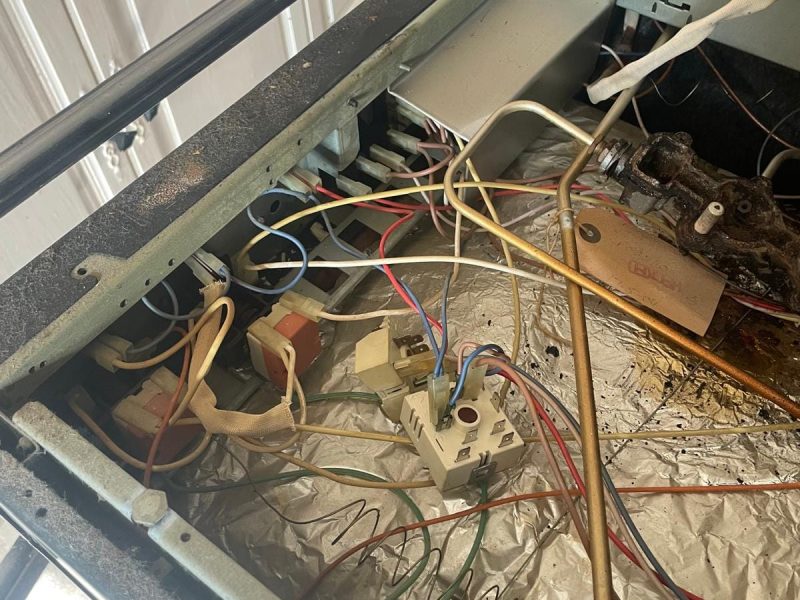
A burning smell from a cooker should always be treated seriously, especially if it smells like melting plastic, hot wiring, metal, or ozone. This can point to overheating wiring, a failed component, damaged insulation, or an electrical fault inside the appliance.
There is one exception. A faint smell or a little smoke can be normal during the first few uses of a new electric cooker, as factory coatings burn off. This should only be short lived. It should not continue, grow stronger, or return every time you use the appliance.
If your cooker has been installed for some time and suddenly starts to smell of burning, turn it off. Do not keep using it to see whether the smell goes away. Norfolk Fire and Rescue Service advises people not to use faulty or damaged electrical appliances and to stop using an appliance immediately if they think there is a fault.
A burning smell can sometimes come from food debris, grease, or residue inside the oven. However, you should not assume this is the cause if the smell is sharp, electrical, or coming from behind the control panel, hob, or switch area. A proper inspection is the safest way to separate a cleaning issue from a real electrical fault.
Visible Sparks Or Smoke
Sparks or smoke from a cooker are immediate warning signs. Sparks from inside the oven, around the hob, or near the controls can indicate a short circuit, failed heating element, loose connection, or electrical component failure.
Smoke from food is different from smoke from the appliance itself. If food has spilled onto the base of the oven or onto an element, it may smoke during cooking. But if smoke appears when the cooker is switched on, or if it comes from behind the appliance, controls, hob, or vents, you should stop using it.
Do not keep testing the cooker. Repeatedly turning it on can make the fault worse and may damage other parts.
Electrical Safety First states that electrical accidents in the home remain a risk, especially as homes now use many more electrical appliances. Their guidance highlights the need to use electrical items safely and be aware of product faults.
If there are visible flames, heavy smoke, or signs of fire, leave the property and contact the emergency services.
The Cooker Trips The Fuse Box
If your cooker trips the fuse box, RCD, or circuit breaker, do not ignore it. This usually means the electrical system has detected a fault. It may happen as soon as the cooker is switched on, when the oven reaches temperature, or part way through cooking.
A cooker that trips the electrics can have several possible causes. These include a failed heating element, moisture entering electrical parts, damaged wiring, a faulty fan motor, a defective switch, or a ground fault.
Some customers reset the fuse box and continue using the cooker. That is not a good idea if it keeps happening. The fuse box is reacting for a reason. Resetting it again and again does not fix the cause.
The Health and Safety Executive explains that electrical equipment should be checked to make sure it is in good condition and suitable for the electrical supply. It also notes that RCD protection can help reduce risk when using electrical equipment.
If your cooker trips the electrics more than once, turn it off and book a repair. A technician can test the appliance and identify which component is causing the fault.
The Cooker Gives You An Electric Shock
If you feel an electric shock when touching your cooker, stop using it immediately. This can point to a serious grounding fault, damaged wiring, moisture ingress, or a live component making contact with the appliance body.
Even a small shock should not be dismissed. It is not normal. It is not something to monitor over time. It needs attention before the cooker is used again.
Turn the cooker off at the wall switch if it is safe to do so. If the problem appears more serious, turn off the relevant circuit at the fuse box. Do not touch the appliance again until it has been inspected.
Greater Manchester Fire and Rescue Service advises that electrical items should not be modified or repaired by householders and that a qualified professional should be used instead.
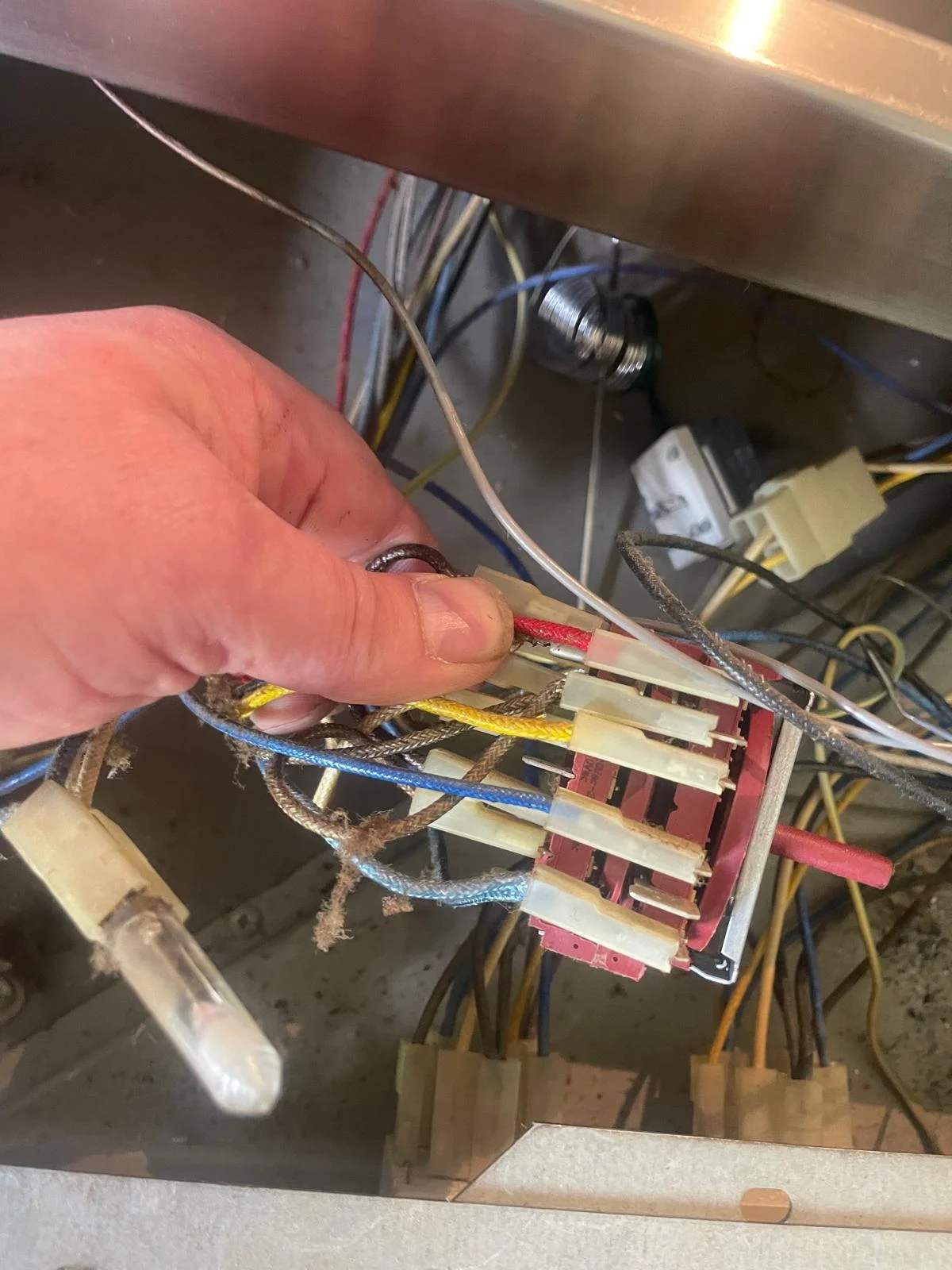
The Hob Will Not Turn Off
A hob that keeps heating after being switched off is a serious fault. It often points to a failed control switch, stuck relay, or control board issue.
This is one of those faults where the appliance should not be used again until it has been repaired. A hotplate or hob zone that stays on can overheat cookware, burn nearby items, damage the hob, or create a fire risk.
Do not rely on turning the control back and forth to make it work. If the hob has already failed to turn off once, it can happen again. Turn the appliance off at the wall switch and arrange a repair.
The Oven Is Severely Overheating
If your oven keeps burning food, runs much hotter than the selected temperature, or feels out of control, the thermostat may not be regulating heat correctly. In some cases, the temperature sensor, control switch, or control board may be involved.
A cooker that overheats is not just frustrating. It can become unsafe. Severe overheating can damage food, trays, internal parts, surrounding kitchen units, seals, and wiring.
Many people assume they are simply choosing the wrong setting or cooking for too long. If the problem keeps happening across different meals, it is worth getting the cooker checked.
A faulty thermostat can also work the other way. The oven may underheat, take too long to cook food, or never reach the set temperature. Both problems point to poor temperature control.
The Cooker Takes Too Long To Heat Up
A cooker that takes much longer than normal to preheat may have a failing heating element. This is a common fault and one that customers often leave until the oven stops heating entirely.
On some ovens, you may notice that only part of the element glows. On others, the oven may appear to work but take far longer to reach temperature. Food may also cook unevenly or need extra time.
Leaving a weak element can make day to day cooking harder, but it can also lead to sudden failure. A proper diagnosis can confirm whether the element, thermostat, selector switch, or another part is causing the issue.
The Fan Is Noisy, Weak, Or Rattling
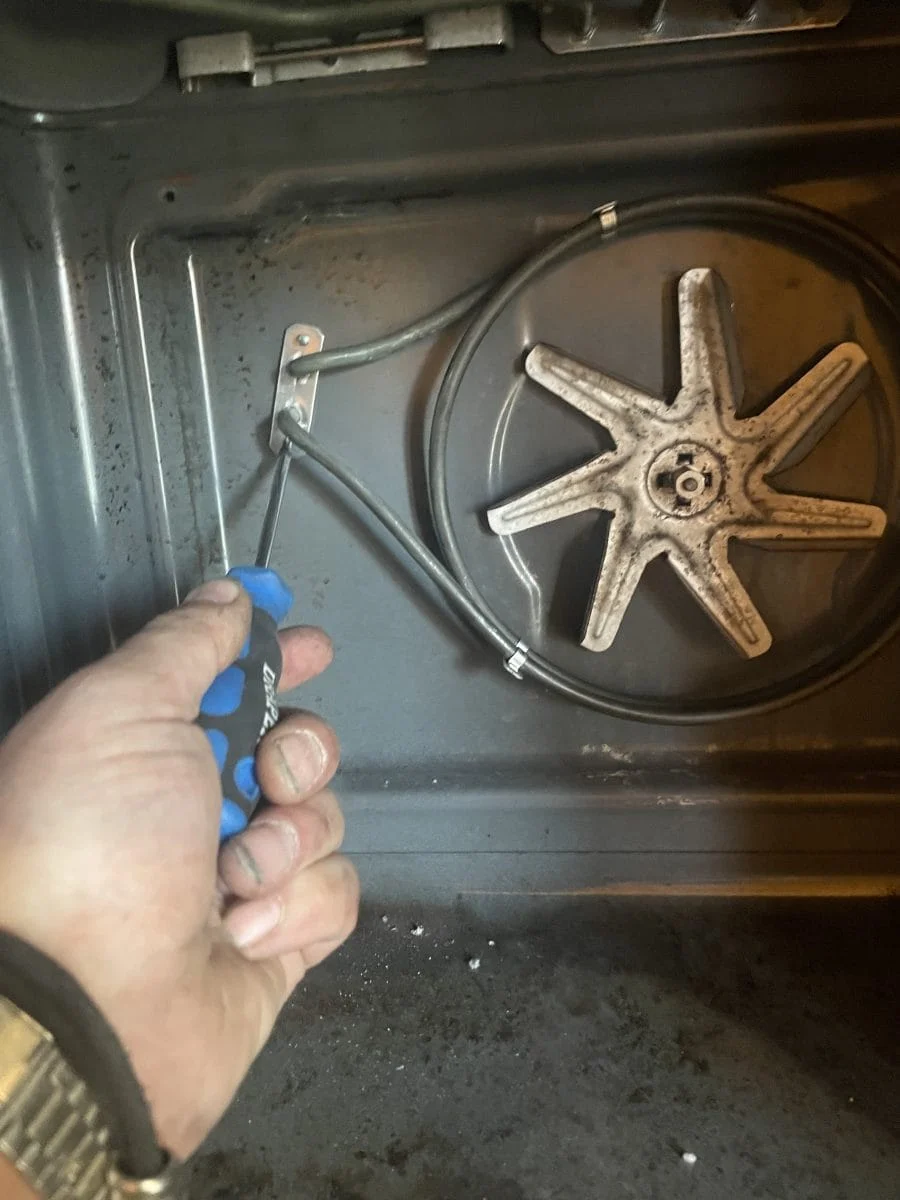
A fan oven should not make excessive rattling, scraping, grinding, or buzzing noises. A weak or noisy fan can indicate worn bearings, a loose fan blade, obstruction, or motor failure.
Many customers ignore fan noise because the oven still works. But the fan plays an important role in circulating heat. If it slows down or stops turning properly, the oven may cook unevenly. One side of a tray may burn while the other side remains undercooked.
A failing fan motor can also place strain on the appliance. It is often better to have a noisy fan checked before it fails completely.
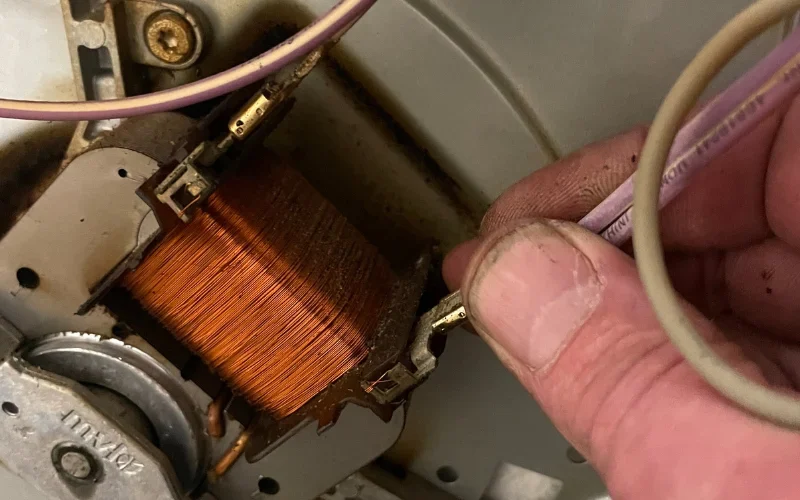
The Oven Door Does Not Close Properly
A loose oven door is more than an annoyance. If the door does not close firmly, heat escapes. This can lead to uneven cooking, longer cooking times, higher energy use, and extra strain on the cooker.
Worn hinges and damaged seals are two of the most common causes. A brittle, torn, or loose door seal allows heat to escape around the edge of the door. Loose hinges can leave the door hanging at the wrong angle.
We recently saw this with a customer in Warmley who had a Neff oven door hinge problem. The repair had been put off until the door had almost fallen off. At that stage, the fault was no longer just a minor inconvenience. The door had become difficult to use and could have caused further damage.
If your oven door drops, feels loose, does not close evenly, or needs lifting into position, book a repair before it gets worse.
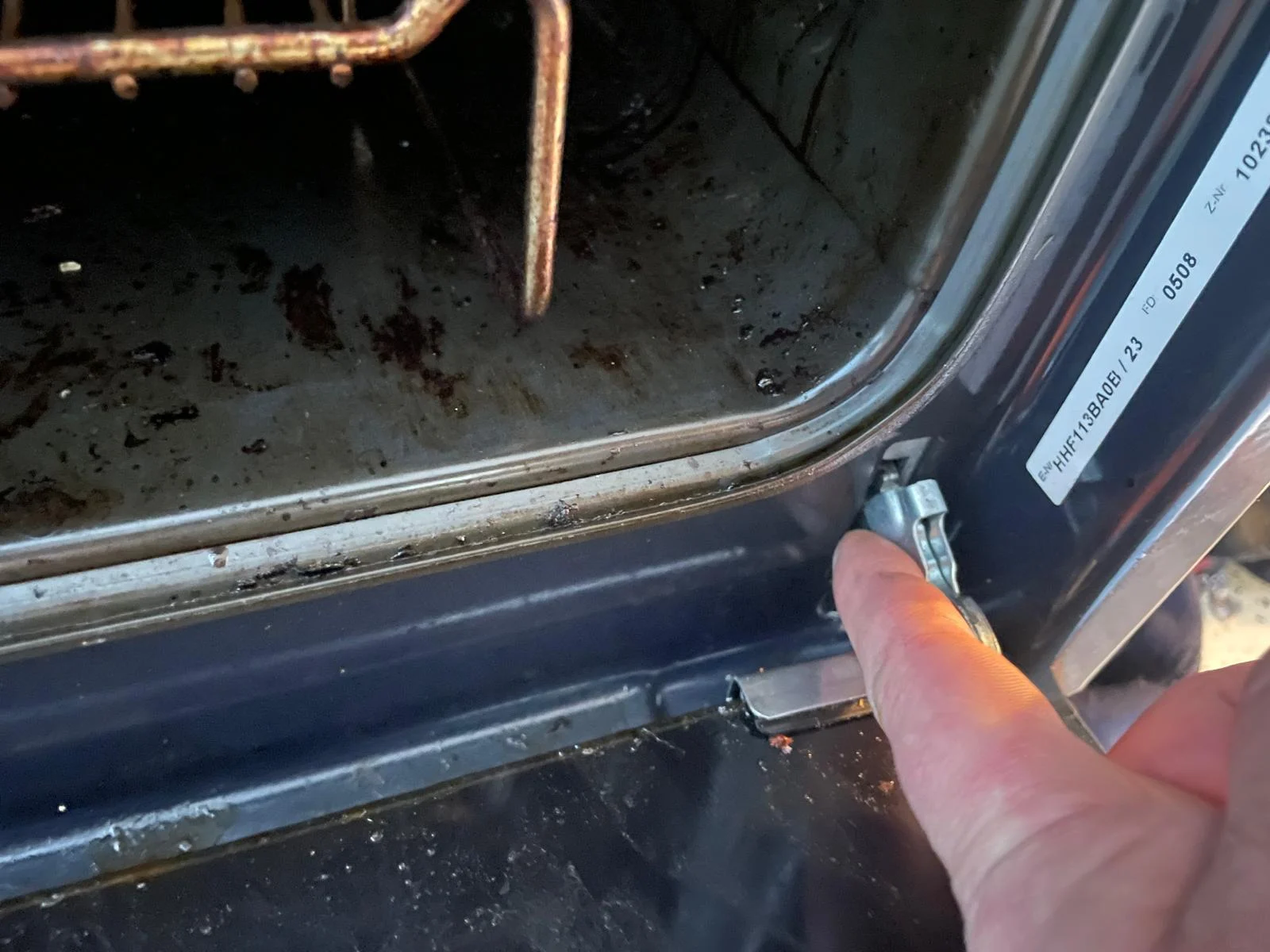
The Door Seal Is Brittle, Torn, Or Loose
A damaged door seal can seem like a small fault, but it affects how the oven performs. When heat escapes, the cooker has to work harder to maintain the correct temperature.
You may notice food taking longer to cook, the kitchen becoming unusually hot, or the oven door area feeling hotter than normal. Over time, escaped heat can affect surrounding cabinets and nearby components.
A worn seal is usually far easier to deal with early. If left too long, the extra heat loss can contribute to other issues.
The Display Flickers Or Touch Controls Stop Responding
Modern cookers often rely on electronic displays, touch controls, timers, relays, and control boards. If the display flickers, buttons only work sometimes, or touch controls become slow to respond, the fault should be checked before the appliance fails completely.
Intermittent faults are easy to ignore. They may come and go for weeks or months. But they often point to a failing switch, keypad, ribbon connection, or control board.
We have seen this with a Fisher & Paykel appliance where the touch button worked intermittently before dying completely. By the time it was inspected, the whole control board needed replacement.
A similar issue happened with a Britannia oven switch. It worked on and off for a while before failing completely. Once a switch becomes unreliable, it is best to deal with it before the cooker stops working.
The Ceramic Or Induction Hob Is Cracked
A cracked ceramic or induction hob should not be used. Even if the hob still heats, the crack can allow liquid to seep through the surface into the electrical components below.
This can lead to short circuits, tripping electrics, shock risk, and more extensive internal damage.
Do not place pans over the crack and carry on using the hob. Do not try to seal it yourself. A cracked glass hob needs professional assessment.
Uneven Cooking Or Food Burning On One Side
Uneven cooking can be a sign of a heating element fault, fan problem, thermostat issue, or poor door seal. It may start gradually, so it is easy to blame the recipe, tray position, or cooking time.
If the same cooker setting now gives different results, something has changed. Your oven should heat consistently. If cakes sink, roasts cook unevenly, or one side of a tray burns while the other stays pale, the cooker needs checking.
This type of fault may not always be an emergency, but it should not be ignored for months.
What To Do If Your Cooker Shows A Serious Fault
If you notice sparks, smoke, burning smells, electric shocks, severe overheating, a hob that will not turn off, or repeated fuse box tripping, stop using the cooker straight away.
Turn it off at the wall switch. This is often a large red switch near the cooker. If the smell, smoke, or fault continues, turn off the relevant circuit at the fuse box.
Do not try to clean, dismantle, or use the appliance again until it has been inspected. Do not remove panels or test internal parts unless you are qualified to do so.
If there is fire, heavy smoke, or immediate danger, leave the property and contact the emergency services.
Why Proper Diagnosis Matters
A cooker fault is not always caused by the most obvious part. An oven that does not heat could have a failed element, faulty thermostat, broken selector switch, wiring issue, or control board fault. A cooker that trips the electrics may need proper testing before any parts are replaced.
This is why proper diagnosis matters. Guessing can lead to unnecessary part replacement and higher costs.
At Appliance Repairs Bristol Ltd, the aim is to identify the fault properly before replacing anything. Some repairs are straightforward. Others need a more detailed investigation, especially with premium brands such as Neff, Britannia, and Fisher & Paykel.
We also give honest advice on whether a repair is worthwhile compared with replacement. In many cases, repairing a quality cooker makes financial sense. In other cases, the age, condition, parts cost, and overall reliability of the appliance need to be considered.
When To Call Appliance Repairs Bristol Ltd
You should arrange a cooker repair if the appliance is unsafe, unreliable, or no longer cooking as it should.
This includes electrical smells, sparks, smoke, tripping electrics, shocks, cracked hobs, overheating, faulty doors, damaged seals, failed elements, noisy fans, and intermittent controls.
Appliance Repairs Bristol Ltd covers all BS postcodes and repairs a wide range of electric cooking appliances. Repairs come with a 6 month warranty for added reassurance.
We do not repair gas faults. However, we can help with electric cooker and oven faults where diagnosis and repair are needed.
Calling early for a cooker repair is often the cheaper option. A noisy fan, weak element, loose hinge, worn seal, or intermittent switch may start as a small inconvenience. Left too long, it can turn into a more expensive repair.
FAQs About Cooker Repairs
Should I stop using my cooker if it smells of burning?
Yes, if the smell is electrical, metallic, plastic like, or unusual. Turn the cooker off at the wall switch and do not use it again until it has been checked. A faint smell can be normal during the first few uses of a new electric cooker, but this should not continue.
Why does my cooker keep tripping the fuse box?
A cooker that trips the fuse box may have a failed element, short circuit, wiring fault, fan motor issue, moisture problem, or ground fault. If it happens more than once, stop using the cooker and book a repair.
Is a cracked ceramic hob dangerous?
Yes. A cracked ceramic or induction hob can allow liquid to reach electrical parts below the surface. This can cause short circuits, shock risk, or further appliance damage.
Why is my oven cooking unevenly?
Uneven cooking can be caused by a weak heating element, faulty fan, damaged door seal, poor hinge alignment, or thermostat problem. If the issue keeps happening, the oven needs a proper diagnosis.
Can a faulty oven door hinge cause bigger problems?
Yes. A loose or damaged hinge can stop the door sealing correctly. Heat then escapes, causing uneven cooking and possible heat damage around the appliance. If the door is dropping or difficult to close, it should be repaired.
Do you repair gas cooker faults?
No. Appliance Repairs Bristol Ltd does not repair gas faults. We can help with electric cooker, oven, hob, switch, control, element, fan, thermostat, seal, and hinge related repairs.
Is it worth repairing an older cooker?
It depends on the fault, the brand, the parts cost, and the condition of the appliance. Premium brands such as Neff, Britannia, and Fisher & Paykel are often worth assessing before replacing. A proper diagnosis helps you make a sensible decision.
Common Signs A Cooker Needs Immediate Repair
A cooker should make cooking easier, not create safety concerns. If you notice burning smells, smoke, sparks, electric shocks, severe overheating, a hob that will not turn off, tripping electrics, a cracked hob, or a door that no longer closes properly, do not ignore it.
Small faults can become expensive when left too long. Early repair can protect your appliance, your kitchen, and your safety.