
A dishwasher rarely fails without warning. In the world of home appliance maintenance, the signs of a looming breakdown are usually present weeks before the machine finally gives up. The problem is that most people misread these signals, ignore the strange noises, or assume the worst and start shopping for a new unit prematurely.
In appliance repair, there are two common (and expensive) mistakes:
- The Procrastination Trap: Waiting until a small leak or a faint grinding noise turns into a catastrophic flood or a burnt-out motor.
- The Premature Replacement: Discarding a high-quality machine that could have been restored to peak performance for a fraction of the cost of a new one.
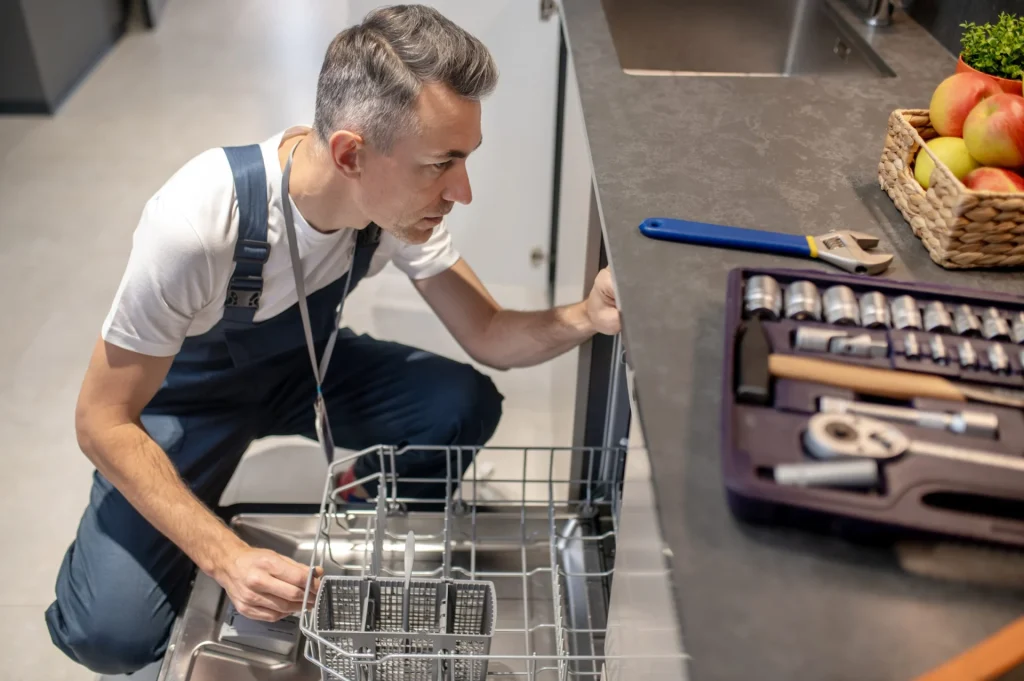
If you are looking for Dishwasher Repair in Bristol, then understanding how a dishwasher works and what different faults actually mean could be what separates a quick fix from an unnecessary replacement.
What Your Dishwasher Is Trying to Tell You
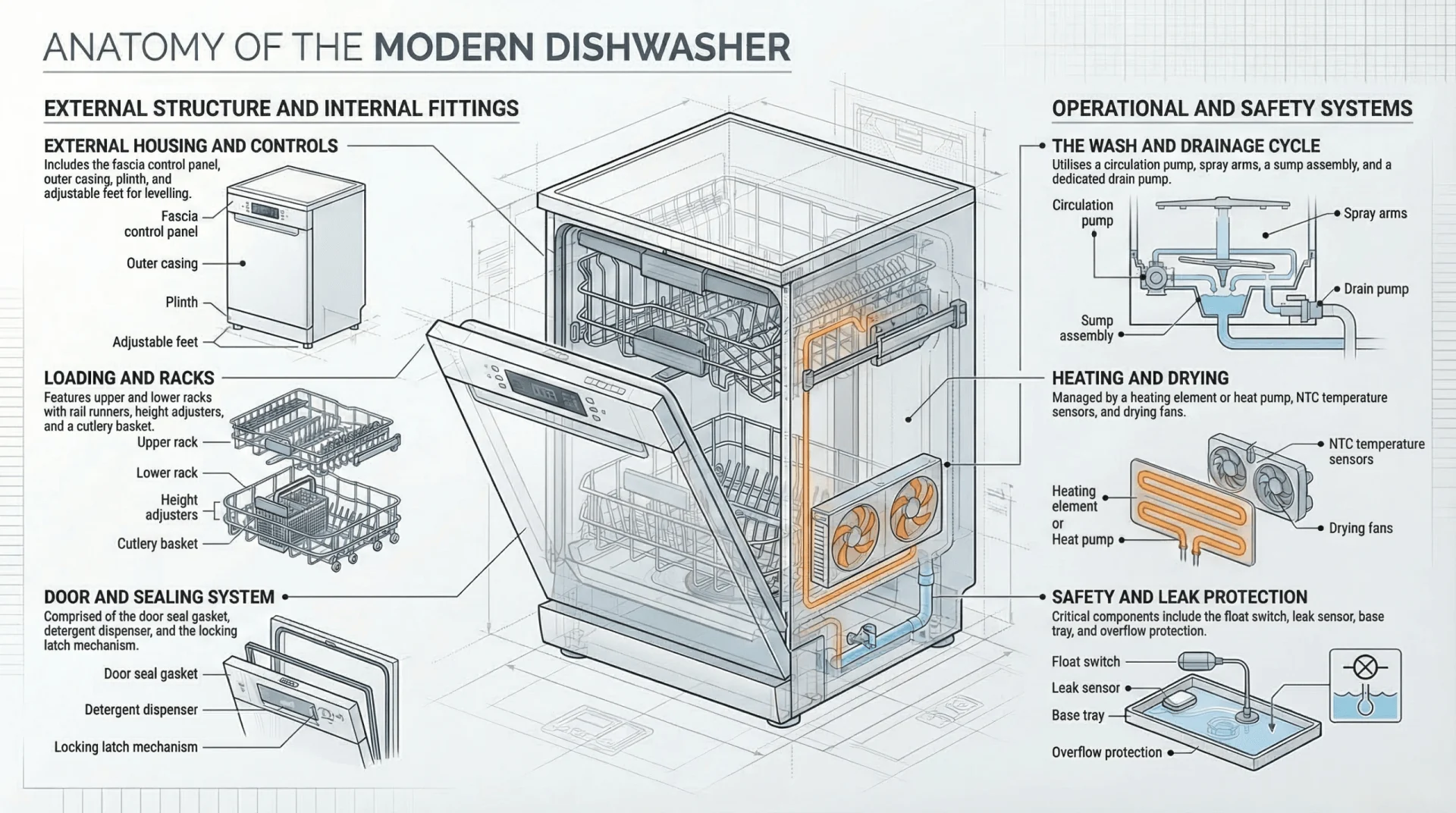
To diagnose a fault, you must first understand that a domestic dishwasher is not a single “black box.” It is a sophisticated ecosystem of specialised components. When one fails, the symptoms often manifest in a different part of the cycle. Lets have a closer look at how the Dishwasher is built
The Anatomy of the System
- Water Inlet Valve: This is an electromechanical valve that opens to allow pressurized water from your home’s plumbing into the unit. If the dishwasher won’t fill, this is the primary suspect.
- Circulation Pump: Once the tub is full, this pump forces water through the spray arms at high pressure. If you hear “humming” but no water is spraying, the motor is likely seized.
- Drain Pump: This small motor expels waste water. If you find standing water at the end of a cycle, the pump is either blocked or the impeller is damaged.
- Heating Element: A metal loop that raises water temperature to kill bacteria and melt grease. If dishes are cold and greasy, this part (or the thermostat) has failed.
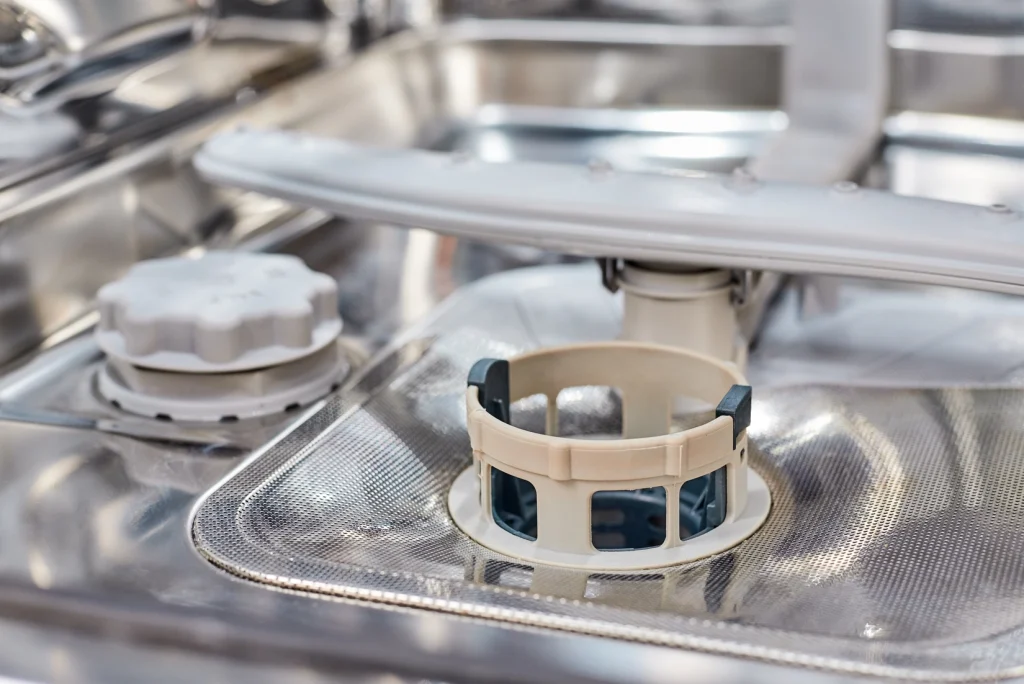
- Filters: Located at the bottom of the tub, these trap food debris. A blocked filter is the #1 cause of poor drainage and bad smells.
- Spray Arms: These distribute water evenly. If the holes are clogged with limescale, your cleaning performance will plummit.
- Door Latch & Control Board: These manage the electrical “brain” of the cycle. If the latch doesn’t click, the machine won’t even start for safety reasons.
The Most Common Signs Your Dishwasher Needs a Repair
The symptoms tend to follow clear patterns. If you notice any of these, your appliance is communicating a specific distress signal.
1. Standing Water in the Bottom
This is the most frequent fault reported to engineers. While many fear the pump has died, it is just as likely that the filter is blocked with paper labels from food packaging or general residue. However, if the filters are clean and water remains, it points to a faulty drain pump or a kinked waste hose.
2. Dishes Coming Out Dirty, Cloudy, or Wet
If your plates feel cold or greasy, the problem is rarely the detergent. More often, it is caused by insufficient water temperature due to a failing heating element or a blocked spray arm preventing the water from reaching every corner of the tub.
3. Unusual Noises (Grinding, Rattling, or Squealing)
- Grinding: Usually means a hard object (like a cherry pit or broken glass) is stuck in the pump.
- Rattling: Often a spray arm hitting a protruding dish.
- Squealing: A red flag for a failing motor bearing, which requires professional attention.
4. Leaks and Overfilling
Puddles on the floor are commonly caused by loose hoses, worn door seals (gaskets), or a faulty water level switch (float switch) that fails to tell the machine to stop filling.
5. A Burning Smell (Critical Fault)
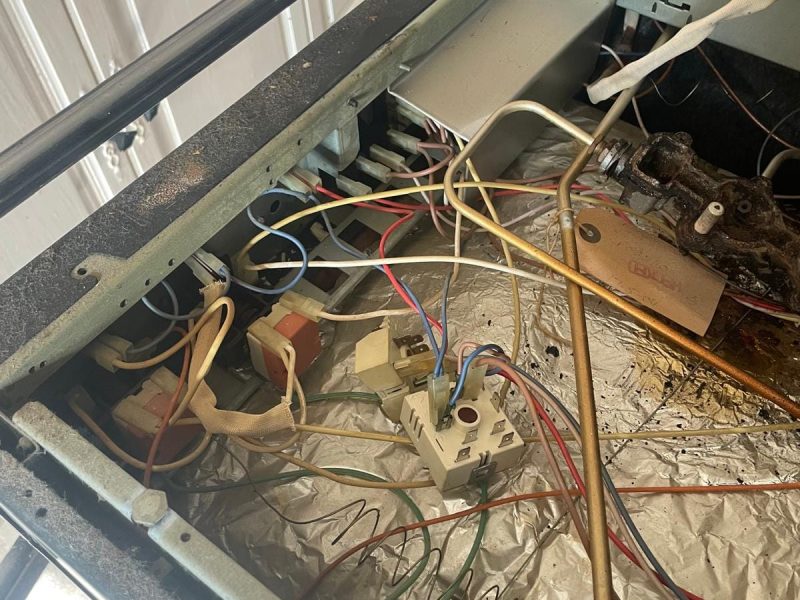
One symptom that should never be overlooked is a burning smell. This is typically linked to an electrical fault or a melting wiring harness. Switch the appliance off at the mains immediately.
Brand-Specific Common Faults: What to Look For
Every manufacturer has its own engineering quirks. Recognising these can help you communicate better with a technician.
Bosch, Neff, and Siemens (The BSH Group)
These German-engineered machines are famous for the E15 Error code. This is triggered by a sensitive float switch in the base tray. It often doesn’t mean a part is broken; it could just be “over-sudsing” from using too much detergent, causing foam to leak into the base and trigger the sensor.
Whirlpool and Hotpoint
These models often experience issues with the diverter valve. If you notice that only the bottom rack is getting clean while the top rack stays dirty, the diverter motor, which directs water flow between the upper and lower arms, has likely failed.
Samsung and LG
As “tech-first” brands, these often have highly sensitive leak sensors. Sometimes, high humidity in the kitchen can trigger a false leak code. A common expert tip is to tilt the machine slightly to drain any condensation, which often clears the fault code without needing a spare part.
The “Invisible” Signs: When Performance Drops Slowly
Sometimes a dishwasher doesn’t “break”, it just degrades. This is the most dangerous stage because it wastes electricity and water without you realizing it.
- Increased Cycle Times: If a standard “Auto” cycle used to take 90 minutes but now takes 150, your NTC (Temperature Sensor) is likely coated in limescale. It can’t read the temperature correctly, so it keeps the heater on for longer than necessary.
- Cloudy Glassware: This is often a sign of a failing water softener unit. If the internal resin bed is depleted, your dishes are being washed in “raw” hard water, leading to permanent etching or limescale spots.
- Detergent Pod Not Dissolving: If you find a half-melted pod at the bottom of the tub, your water isn’t getting hot enough, or the actuator that opens the detergent flap is sticking. In Bristol and the surrounding BS16 areas, our water is classified as ‘Hard’ to ‘Very Hard.’ This makes regular descaling and salt refills essential to prevent the solenoid valve and heating element failures we frequently see in local homes. Without proper water softening, limescale builds up on the internal sensors, tricking the machine into skipping the heat cycle required to dissolve the pod..
Simple Checks You Can Carry Out Yourself
Before calling an engineer, perform these five basic checks. They are simple but often resolve “apparent” failures.
- The Filter Test: Remove the filter at the bottom, twist it out, and clean it under a hot tap with a soft brush.
- The Spray Arm Needle: Take a toothpick and clear any debris from the tiny holes in the spray arms.
- The Inlet Hose: Check the hose at the back for any kinks or restrictions that may be limiting water flow.
- The Hard Reset: Unplug the machine for 10 minutes. This allows the control board capacitors to discharge and can clear “glitch” error codes.
- The Door Seal: Wipe the rubber gasket with a damp cloth. A build-up of old food can prevent a watertight seal, causing minor leaks.
Repair vs. Replacement: What Actually Makes Sense?
The decision to repair or replace is rarely as straightforward as it seems. Instead of asking if it’s “broken,” use this Rule of Three:
1. The Age Factor
- 0–5 Years: Almost always worth a repair. The core components are still in their prime.
- 6–9 Years: The “Grey Zone.” Repair if the cost is under 30% of a new unit.
- 10+ Years: Generally time to replace, as efficiency gains in newer models will save you money on bills.
2. The Total Cost Calculation
- Repair It: If the fix is a “Peripheral” component like a door seal, valve, or thermal fuse.
- Replace It: If the “Main Heart” (the Circulation Pump) or the “Brain” (the Control Module) has failed in an older machine.
3. Physical Integrity
- Repair It: If the tub is stainless steel and the racks are clean.
- Replace It: If you see rust spots on the tub floor or the interior plastic is cracked.
The Environmental Argument for Repairing
In 2026, the “Right to Repair” movement is more important than ever. Google and global consumers now prioritize sustainability.
- Carbon Footprint: Manufacturing a single dishwasher produces approximately 300kg to 500kg of CO2.
- Waste Reduction: By replacing a £15 solenoid valve instead of scrapping the machine, you prevent 50kg of metal and plastic from entering a landfill.
- Longevity: A high-end machine (like a Miele or Bosch) is often built to last 15 years. Scrapping it at year 7 because of a minor pump issue is an environmental and financial waste.
Frequently Asked Questions (FAQs)
Why does my dishwasher smell like rotten eggs?
This is usually caused by trapped food waste in the filter or a clog in the drain hose. Run a “Cleaning Cycle” at the highest temperature with a dedicated cleaner.
Is it normal for the sides of the dishwasher to be hot?
Yes, during the drying phase, the internal temperature can reach 70 degrees. However, if the exterior cabinet feels hot to the touch, your door gasket has failed and is venting heat.
Does using “All-in-One” tablets mean I don’t need salt?
No. Your dishwasher’s internal water softener still needs granular salt to function. Tablets don’t “recharge” the ion-exchange resin inside the machine.
Can I use a chemical drain unblocker in my dishwasher?
Never. Caustic drain cleaners can destroy the internal rubber seals and plastic components of a dishwasher, turning a minor clog into a permanent leak.
Don’t Wait for the Flood
If your dishwasher is showing any of the signs above and the cause is not immediately clear, the most effective step is a proper inspection. In many cases, the solution is simpler and cheaper than expected, especially if caught early.
The longer a small issue like a “weeping” seal or a noisy pump is left, the more likely it is to turn into a larger, more expensive repair that could damage your kitchen flooring.
Stop Worrying About Your Dishwasher and Get an Expert Diagnosis Today
Is your dishwasher showing one of the warning signs above? Don’t wait for a minor fault to become a major flood. Our expert engineers specialise in quick, transparent, and affordable repairs for all major brands, including Bosch, Samsung, Whirlpool, and Miele. Contact us today and we’ll get an engineer out to diagnose the issue.