
Most homeowners treat their dishwasher like a magic box and have no idea how a dishwasher works. Dirty dishes go in, clean dishes come out, and everything in between is a mystery. But understanding exactly how a dishwasher works during a wash cycle is not just interesting. It is genuinely useful when something goes wrong.
Dishwasher repairs are among the most common service calls we receive. And in almost every case, the homeowner could have caught the early warning signs if they had known what to look for. This guide breaks down the full anatomy of a dishwasher cycle, from first fill to final dry, so you can diagnose problems faster, maintain your machine better, and avoid the cost of an emergency callout.
The Water Inlet Valve: Where Every Cycle Begins
The moment you press start, your dishwasher’s water inlet valve opens. This electromagnetic solenoid controls the flow of fresh water into the machine and is the first component in the entire cleaning process.
Unlike a washing machine, a dishwasher does not flood the whole tub. It fills only a shallow basin at the bottom with roughly two to three gallons of water. This precision fill is intentional. Too much water reduces cleaning pressure. Too little and the heating element runs dry.
Protecting against overfill is a small but critical component called the float switch. This plastic cylinder sits in the base of the tub and physically breaks the circuit to the inlet valve if water rises too high. It is one of the simplest parts in the machine and one of the first things a technician checks when a dishwasher is leaking or flooding.
The Heating Element and Thermistor: Temperature Is Everything
Once the basin is filled, the heating element activates. This is the metal ring you can see sitting at the bottom of the tub, and its job is to bring the water up to the temperature required for effective cleaning.
Most modern detergent pods and tablets are engineered to dissolve and activate between 120°F and 140°F (50°C to 60°C). Below that threshold, the enzymes in the detergent do not fully activate, which is why dishes come out greasy or with residue even after a full cycle.
Monitoring this temperature is the job of the thermistor, a small sensor that feeds real time temperature data to the control board. When a dishwasher runs endlessly without advancing to the next stage of the cycle, a faulty thermistor is one of the most common causes. The machine is waiting for a temperature signal that never arrives.
The Circulation Pump and Spray Arms: Where the Cleaning Happens
The heart of the cleaning process is the circulation pump. Once the water is heated, this pump draws it up and forces it through the spray arms at high pressure. The water pressure itself causes the arms to rotate, exactly like a lawn sprinkler, distributing jets across every surface in the load.
The spray arm holes are small and precisely angled. Any blockage, whether from mineral buildup, broken glass, or food debris, disrupts the spray pattern and results in dirty dishes even after a full cycle. Checking and clearing these holes is one of the simplest maintenance tasks a homeowner can perform.
Higher end dishwasher models also include a macerator, a small grinding mechanism similar in function to a garbage disposal. This pulverises soft food particles before they can travel through the system and clog the spray arms or filter.
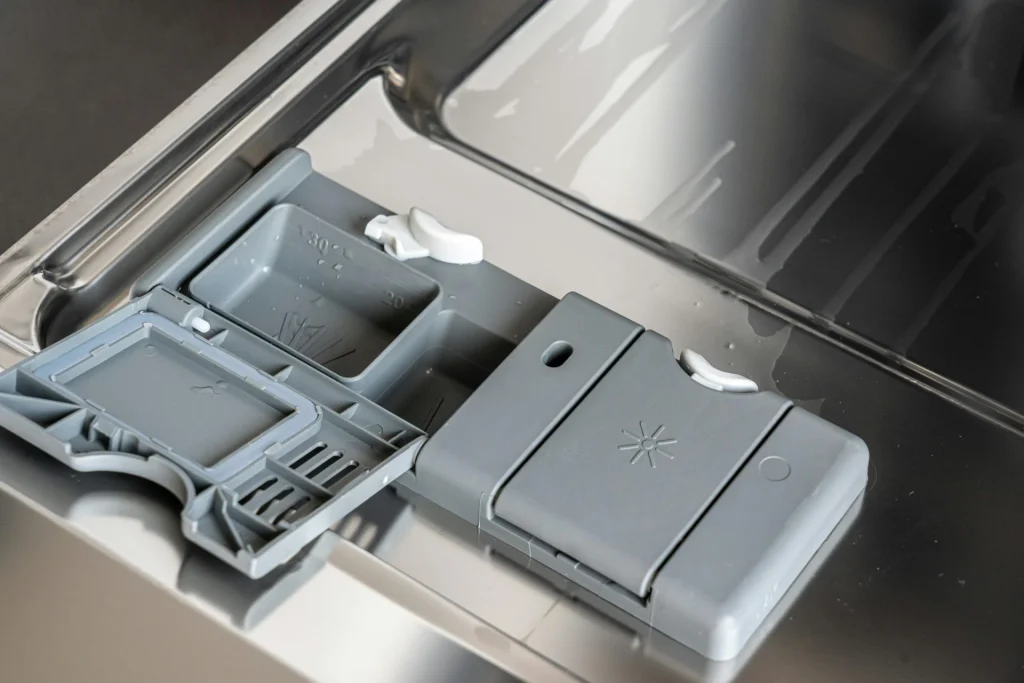
The Detergent Dispenser: Timing Matters More Than You Think
Your dishwasher does not release detergent at the start of the cycle. The dispenser is a spring loaded door controlled by either a wax motor or a solenoid, and it is programmed to open at a very specific moment during the wash.
This timing is deliberate. If the door opens during the initial pre-rinse, the detergent is flushed away before it can do any work. If it opens too late, the water temperature has already dropped and the detergent will not dissolve properly. A dispenser that fails to open at the right moment is one of the more common causes of poor wash results and is a frequent point of failure we see on repair calls.
The Drain Pump, Check Valve, and Filtration System
Once the wash cycle is complete, the drain pump engages. This uses a separate impeller to push dirty water out through the drain hose and away from the machine.
A small rubber flap called the check valve sits inside the drain line. Its job is to prevent dirty water from flowing back into the dishwasher from the sink drain. When this valve fails or becomes stuck, you will often find standing water in the tub at the end of a cycle even though the drain pump is working correctly.
Modern dishwashers also feature a multi stage filtration system, typically a coarse filter combined with a fine mesh screen, that traps food particles before they can recirculate onto your dishes. If your dishwasher has developed a persistent unpleasant smell, a blocked or dirty filter is almost always the cause. This filter should be removed and cleaned at least once a month under running water.
Drying Technology: More Than Just Heat
Older dishwashers dried dishes by simply continuing to run the heating element after the final rinse, essentially baking the moisture off. Modern machines are significantly more sophisticated.
Condensation drying is now standard in most European style units. The stainless steel tub cools faster than the dishes themselves, causing moisture to condense on the walls and drain away naturally. This method uses less energy and is gentler on plastics and coated surfaces.
Some models complement this with a small ventilation fan that draws humid air out of the tub at the end of the cycle, speeding up the drying process without additional heat. If your dishes are consistently coming out wet, the issue is often a failed heating element, a faulty vent fan, or a rinse aid dispenser that is empty or set too low.
Three Warning Signs Your Dishwasher Needs Attention
Knowing how your dishwasher works makes it much easier to interpret the signals it gives you when something is wrong. Here are the three most common warning signs and what they typically indicate.
Standing water after the cycle points to a blocked drain pump, a kinked drain hose, or a failed check valve. Do not ignore this. Persistent standing water accelerates odour, mould growth, and internal corrosion.
Dishes coming out cold and wet usually indicates a burnt out heating element or a faulty relay on the control board. If your machine is completing the cycle but everything inside feels cold, this is the most likely culprit.
A humming sound with no water spraying is often called the hum of death by technicians. The motor is running but the circulation pump impeller is seized or broken. This requires a repair call rather than a DIY fix.
What This Means for Maintenance and Longevity
A dishwasher is a carefully balanced system of water pressure, heat, and chemistry. When any one of those three elements is disrupted, the entire cycle suffers. The good news is that the majority of common dishwasher problems are preventable with basic routine maintenance.
Clean your filter monthly. Run a descaling tablet through an empty cycle every two to three months, particularly if you live in a hard water area. Keep your rinse aid topped up. And if you notice any of the warning signs above, address them early before a minor fault becomes a major repair.
Understanding how a dishwasher works makes it far easier to maintain one properly
Looking for a qualified appliance technician in your area? Contact our team at Appliance Repairs Bristol Ltd for fast, reliable dishwasher repairs with no hidden callout fees and we can be out the same day to get your Dishwasher repaired.